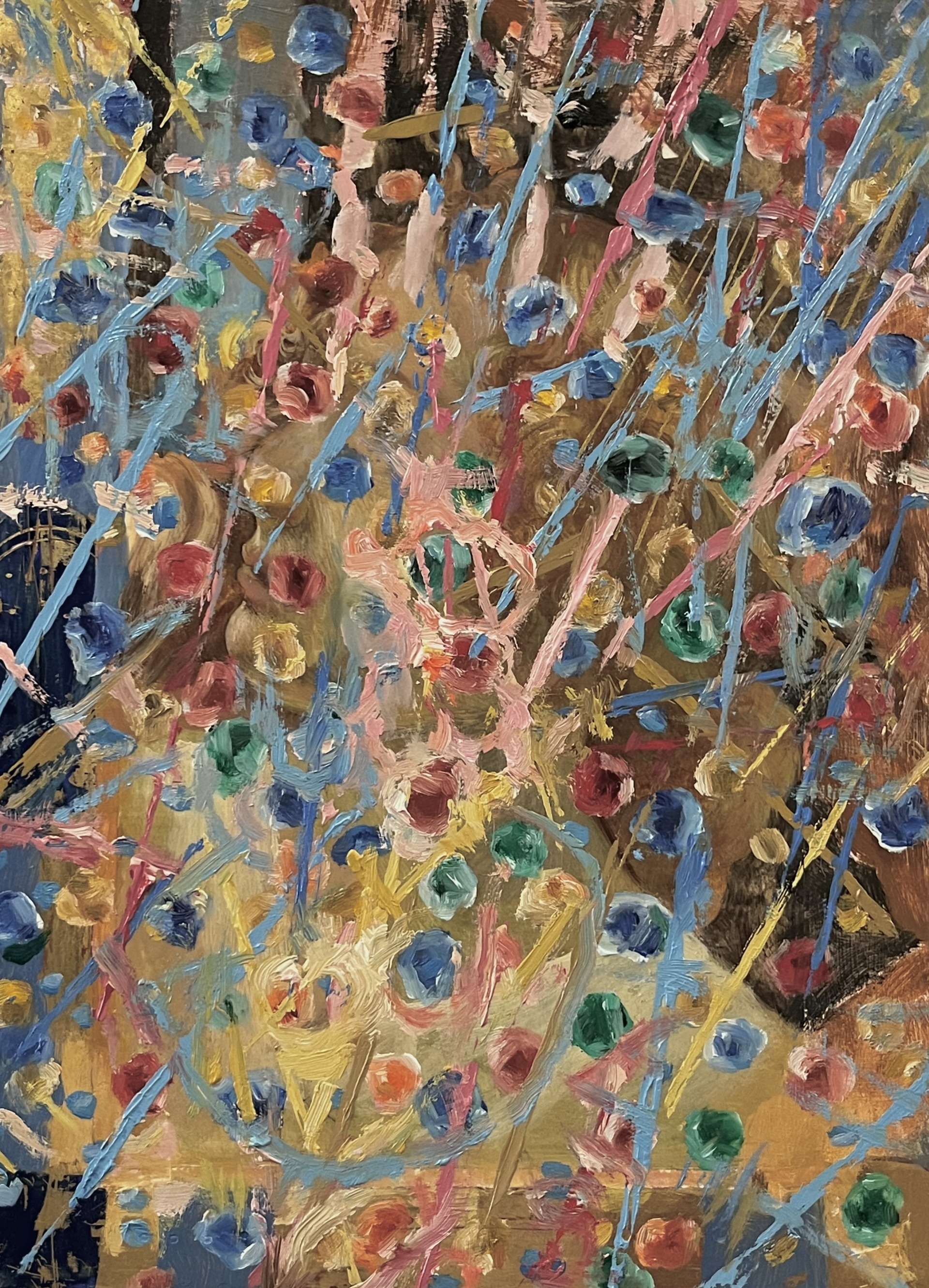
A painting is less a matter of “expression” than it is a desire to see. By rendering it into a painting, it becomes something that can be seen. The maker of a painting is, first and foremost, the one who sees it—the very first person to witness the emerging image.
What one desires to see is not necessarily something or someone that exists in actual reality, nor is it necessarily a landscape. Nor is it confined to things one has seen in the past. Because the desire to see comes first, and the painting begins from that origin, anyone is capable of making a painting. Whether depicting the atomic bomb or the lived experience of war, at the root of it all lies this fundamental desire to see; this is precisely why even the most tragic circumstances or cruelest realities can be rendered into art. It is in this manner that a painting becomes visible—manifesting as something compelling, as a fascination.
To desire to see, and to bring into visibility—this is the confirmation and intense affirmation of one’s existence right here and now. Consequently, even when a painting depicts death, it is ultimately turned toward life.