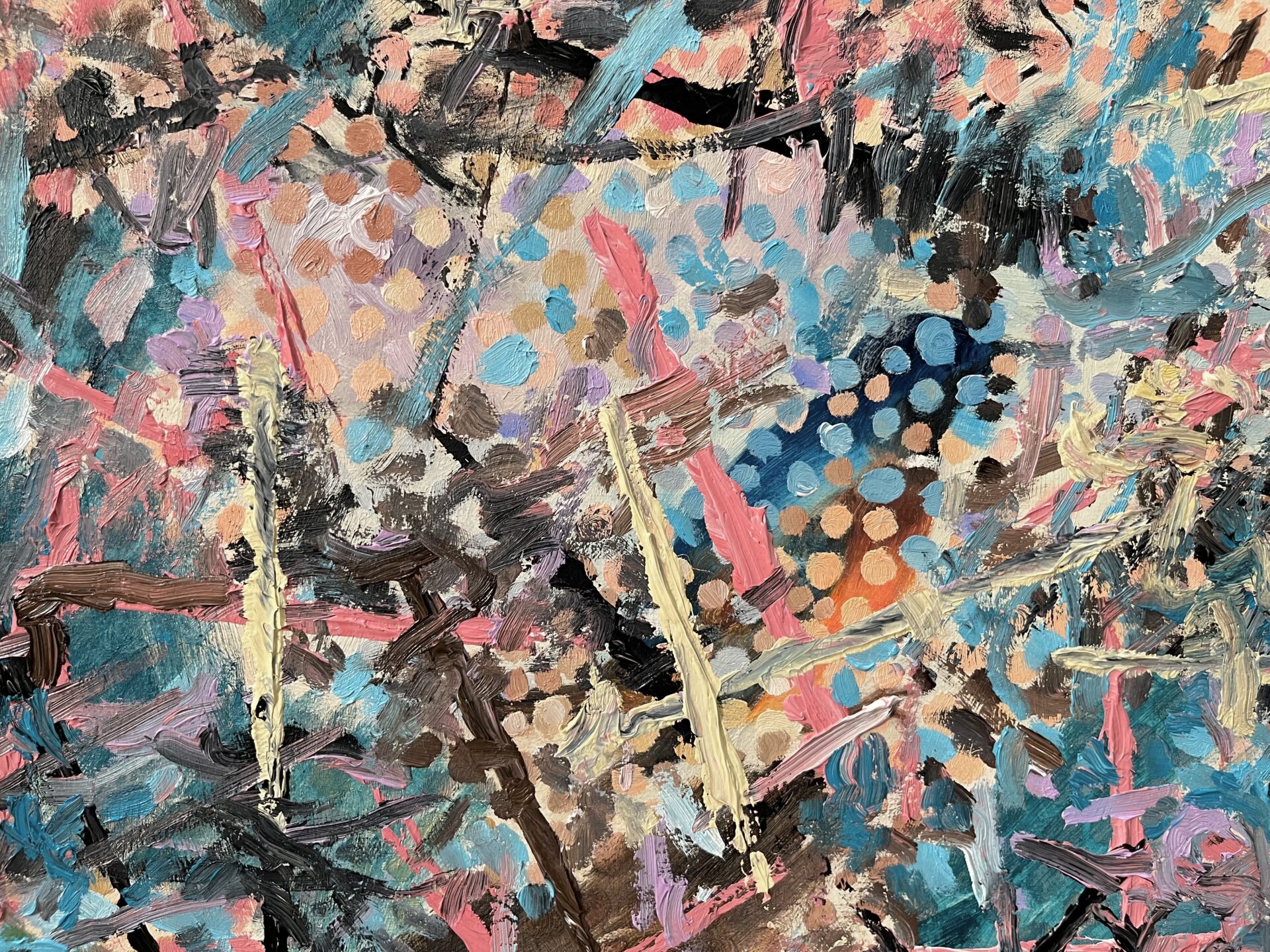
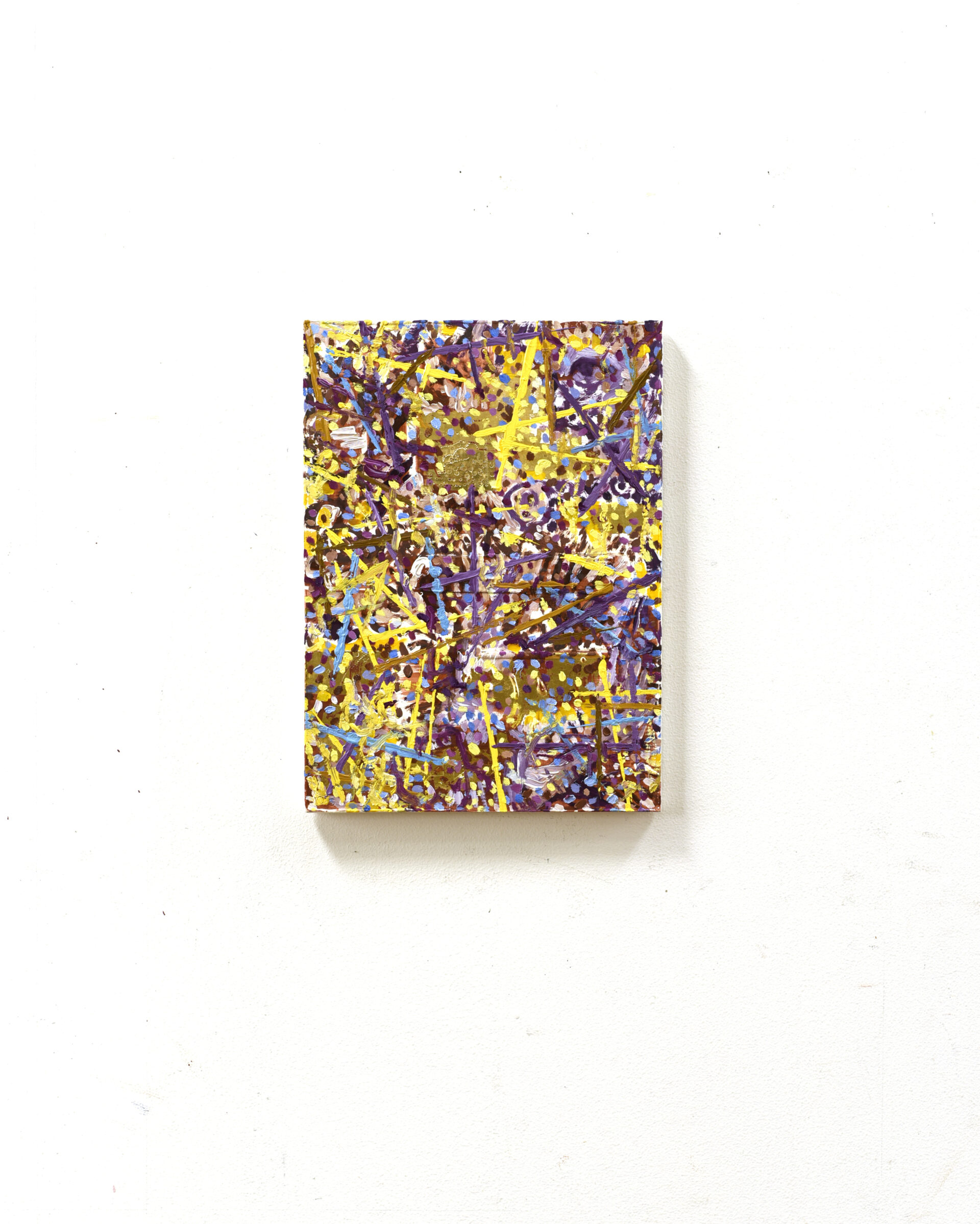
Paintings are always static. Moreover, they are suspended in midair on a vertical surface―a wall―rather than resting on stable ground or a floor. Though a protective frame exists to mitigate this instability somewhat, the painting’s essence remains nothing more than a two-dimensional object coated in color. It is an unstable entity belonging neither to earth nor sky―a substance called paint adhering to a flat surface like canvas. Of course, illusions emerge from this, transforming the material into something more than mere substance. Yet without witnessing this material metamorphosis, the pleasure of viewing a painting is not merely halved―it vanishes entirely.
This metamorphosis is the eros of paint, the eros of the material substance itself. To see this is not merely to look, but to experience a sensory encounter bordering on tactile perception. Without this, a painting becomes nothing more than a transparent picture story of images.
There is projection mapping. Even when static, the projected image constantly moves through electrical signals, stimulating our eyes, rendering our bodies transparent, granting a sense of omnipotence, and letting us float in midair.
On the other hand, a static painting does not move. What moves is the sensation inherent in our own bodies, reacting to the eros of the paint, demonstrating that the body is confronting matter. This image is a material image that cannot be discussed by simply extracting the image alone.
In the final room of the “Van Gogh Exhibition” at the Tokyo Metropolitan Art Museum, an image stretched across the entire wall was projected, and the smartphones of many visitors were held aloft there. “It’s easier to understand than the paintings,” a young voice remarked.
But I don’t understand it at all. I have no desire to step inside a giant, stretched-out Van Gogh painting, nor do I want to be drawn into an experience where the paint’s texture is imagined as mountains or landscapes from the side.
Paintings have gradually come to be seen as mere images, labeled with meaning, made easy to understand, and ultimately discarded. Parallel to this, people have lost their physicality, gained a sense of omnipotence, and come to believe (or delude themselves into believing) they can go anywhere.
絵はいつも静止している。しかもそれは安定的な地面や床ではなく壁という垂直面に宙づりになっているのだ。その不安定さを少しでも払うように額縁という保護枠があるのだが、絵の実体は何かというと色載せ2次元物体にほかならない。キャンバスなどの平面に、えのぐという物質がついた、地にも天にも属さない不安定な物体なのである。もちろんそこからイリュージョンが発生し物質は単なる物質ではない何ものかに変身するが、その物質的変容のさまを見ないと絵を見るおもしろさは半減どころかなくなってしまう。
変容のさまとはえのぐのエロスであり、えのぐという物質のエロスである。これらを見るというのは、単純に見ることだけでなく肌触りに近い感覚まで含めた見る体験なのだ。これがないと絵は単なる画像の透明な絵物語になってしまう。
プロジェクションマッピングがある。映し出された画像はたとえ静止していても電気信号によってたえず動きこちらの目を刺激し、肉体を透明にし、万能感を与え、宙に遊ばせてくれる。
一方、静止している絵は動かない。動くのはこちらの肉体がもっている感覚であり、えのぐのエロスに反応し、肉体が物質に相対していることを示す。この画像とは、単純に画像だけを取り出して語ることができない物質的画像なのだ。
東京都美術館の「ゴッホ展」の終わりの部屋では壁一面に絵を引き延ばした映像が映し出され、高々とかざされる多く観客のスマホがそこにあった。「絵よりもわかりやすい」と若い人の声も聞こえた。
ところがこちらはまったくわからない。巨大に引き延ばされたゴッホの絵の中に入ってみたいとは思わないし、えのぐの凹凸を横から山のように、あるいは風景のように見立てて、その映像に引き込まれるような体験をしたいとも思わない。
絵はいつの間にか画像とみなされ、意味がつけられ、わかりやすいものとなりその果てに捨てられるようになった。それと平行するようにひとは肉体をうしない万能感を得てどこにでも行ける(と錯覚する)ようになった。